
How to Check Criminal History in Marion County
No single Marion County search covers every criminal record. Begin with the event and the office that created it. The sheriff and jail answer custody and booking questions. The District Clerk holds felony files, while the County Clerk holds constitutional County Court misdemeanor files. Justice courts and Jefferson Municipal Court keep their own fine-only dockets. The statewide DPS name search is a separate product that reports public Texas convictions and deferred adjudications submitted by justice agencies.
Gather a full legal name, date of birth, likely spelling variants, an event date, and a cause or booking number if known. Those facts help distinguish people with similar names. Use the record date as well because custody and court status can change. Then follow the channel that answers the question:
- Search the county's current inmate roster when present custody is the issue.
- Call the correct Marion County clerk for a filed charge, docket, disposition, or judgment.
- Use the DPS CCH search for reported statewide public convictions and deferred adjudications.
- Request the underlying report or case file from its agency rather than relying on a result summary.
- Use fingerprint review for your own identity-linked Texas record or ask the clerk for a certified copy when formal proof is needed.
Marion Criminal Records at the Courthouse
The restored 1913 Marion County Courthouse remains the local records hub. It stands at 102 W. Austin Street in Jefferson and keeps regular hours from 8 a.m. to noon and 1 to 5 p.m. on weekdays. The noon closure matters for walk-in searches. District Clerk Susan Anderson works in Room 303 and handles the local files for the 115th District Court. County Clerk Kim Wise handles County Court misdemeanor records. Fine-only matters remain with a justice court or Jefferson Municipal Court.
The official Marion County homepage shows the restored courthouse and leads to each department. That central location is more than local color: it explains why criminal history searches move among separate counters rather than through one county portal.
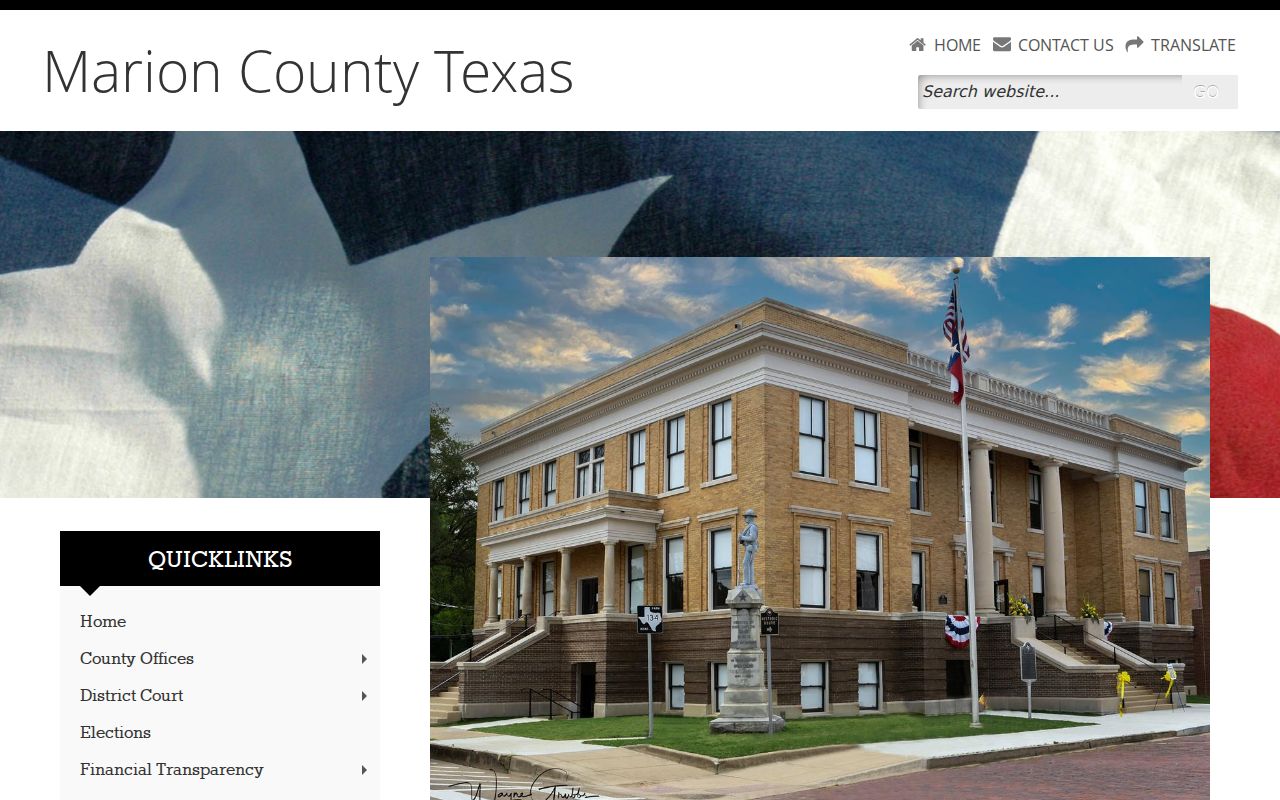
The same downtown cluster also places the sheriff and justice offices close to the court clerks, though each office still controls a distinct record.
Choose the clerk by jurisdiction before asking for a search. District felony matters go to Room 303. Class A and B misdemeanor files within the constitutional County Court's authority go to the County Clerk. JP Precinct 1 and JP Precinct 2 keep their own fine-only cases, citations, and court-issued process. Jefferson Municipal Court does the same for matters inside its city jurisdiction. If the offense level is not clear, identify the arresting or issuing agency and approximate date when calling. That lets staff route the request without treating every Marion County record as a District Court case.
District Clerk
Room 303, 102 W. Austin Street
903-665-2441
Felony and district files
County Clerk
102 W. Austin Street
903-665-3971
County Court misdemeanor files
Marion County Sheriff
114 W. Austin Street
903-665-7201
Sheriff reports and custody routing
Official Texas Background Checks
The Texas Department of Public Safety Crime Records Division operates the Computerized Criminal History system. Its public Criminal History Conviction Name Search can show public conviction and deferred-adjudication information reported by Texas criminal justice agencies. It is not a complete rap sheet, county docket, or live arrest index. A search credit is used even when no match appears, and one search can return several possible people. DPS leaves identity confirmation to the user.
For self-review, DPS fingerprint-based Review of Personal Criminal History is stronger. FAST fingerprints are captured through IdentoGO with the service code supplied for the purpose. A person seeking a national self-review can request an FBI Identity History Summary with fingerprints. Each product has different scope.
| Official product | Scope | Confirmed charge |
|---|---|---|
| Texas DPS public name search | Public reported Texas convictions and deferred adjudications | $1 credit; card fee of 2.25% per credit plus $0.25 per order |
| DPS personal fingerprint review | Your identity-linked Texas history | Confirm in the live scheduler |
| FBI Identity History Summary | Your fingerprint-linked national FBI history | $18 direct, plus fingerprint or mailing costs |
| Marion clerk or sheriff request | Local files, copies, reports, or bookings | Local fees were not published; ask for an estimate |
Inside the Marion Criminal Name Search
The DPS CCH search instructions explain credits, possible matches, and the need to compare more than a name. Last and first names are required. A middle name, date of birth, sex, and race can narrow a result. Exact and similar-sounding match behavior may change the candidate list. A no-match result still costs a credit.

The instruction screen makes the core limit clear: a possible match should lead to verification, not an instant conclusion.
| Search field | Use | Required |
|---|---|---|
| Last name | Primary name match | Yes |
| First name | Primary name match | Yes |
| Middle name | Helps split common names | No |
| Date of birth | Improves identity matching | Recommended |
| Sex and race | Optional demographic filters | No |
The public CCH entry screen is the official statewide name-search starting point.
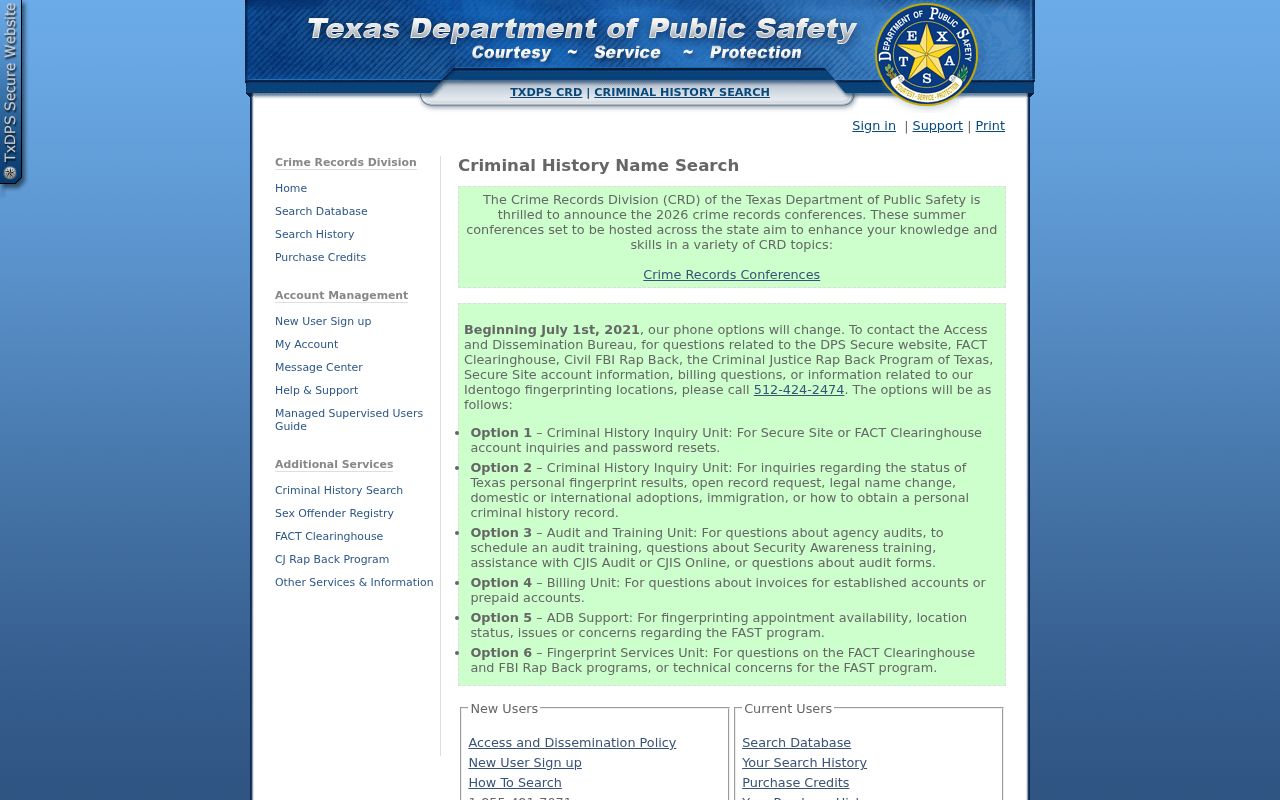
Save the search date and compare any result with the originating Marion County court file.
Types of Criminal Records
Marion County criminal records differ by who created them and when. An incident report records an officer's account. A booking record documents intake and custody. A complaint, information, or indictment carries an accusation into court. The clerk's case file tracks hearings, pleas, disposition, judgment, and sentence. DPS CCH connects fingerprint-supported arrest cycles to reported outcomes, but its public subset is narrower than a full personal review.
- Arrest and booking records: held by the arresting agency and Marion County Jail.
- Criminal case files: kept by the District, County, justice, or municipal clerk with jurisdiction.
- Warrants and capias records: split between the issuing court and executing agency.
- Custody and supervision records: divided among the jail, TDCJ, Marion County CSCD, and parole authorities.
- Registry records: registered locally and aggregated by DPS for lawful public access.
These records can describe the same event without showing the same facts. The Marion County arrest history process is therefore only one part of the broader record trail.
Marion Criminal Records in the Live Roster
The sheriff's official page links a vendor-hosted Current Inmate Roster. Its live name filter covers people shown as currently in custody. Public cards may display full name, race, ethnicity, birth year, arresting agency, booking date, days in custody, a shortened booking identifier, current charges, Code or Ordinance, and custody status. The inspected cards did not promise bond, release date, judge, warrant number, or a full date of birth.
A released person may vanish from the live list, so absence does not prove that no earlier arrest occurred. Call the jail at 903-665-3271 for current custody questions, request a booking record from the sheriff, and use the proper clerk for the later disposition. Texas SAVNS can send custody and court-event notices, but it is not a past-arrest database.
The jail itself is at 102 W. Dallas Street, while the Sheriff's Office is listed at 114 W. Austin Street. That address difference can matter when a reader needs the 24-hour custody line instead of a public-record routing call. The roster offers only a live name filter, a current result total, paging controls, and a link to the full profile. It posts no date filter, export, historical search, fee, or guaranteed update schedule. Direct facility contact remains the fallback when the vendor screen is incomplete or unavailable.
Record path: Arresting agency › Marion County Jail booking › prosecutor and clerk › DPS CCH disposition reporting.
Note: A booking charge may change before filing, and a roster entry never proves guilt.
What a Marion County Criminal Record Shows
A complete identity-linked criminal history can contain an identification segment, arrest cycles, prosecutor and court tracking, dispositions, sentences, custody, and supervision. A Marion County court file is arranged by cause number and docket event. A jail profile is arranged by one booking. Public access can remove identifiers and confidential fields.
| Name and identifiers | Legal name, aliases, date of birth, descriptors, Texas SID or FBI number when lawfully available. |
|---|---|
| Arrest and booking data | Agency, arrest date, booking event, tracking number, and charges as booked. |
| Charges and statutes | Complaint, information, indictment, offense citation, class, and later charge changes. |
| Disposition | Conviction, dismissal, acquittal, no-bill, or deferred adjudication as recorded. |
| Sentence | Custody, fine, restitution, or community-supervision terms in the judgment. |
| Custody or supervision | County custody, TDCJ placement, parole, or public court evidence of community supervision. |
Read the outcome field with care. A booked charge states why intake occurred. A filed charge states what the prosecutor brought to court. A disposition states what happened to that filed charge. Terms such as dismissed, acquitted, deferred, and convicted are not interchangeable, and a generic status such as closed does not reveal which one applies.
Fingerprint Checks for Marion Criminal History
A person reviewing their own Texas record should follow DPS instructions for the FAST service code and then schedule with IdentoGO. The appointment confirmation controls which identity documents to bring. Keep the transaction control or reference number after prints are taken. No permanent enrollment center in Marion County was confirmed, so search the scheduler by the Jefferson ZIP code when booking.
The scheduler is also where the current site and purpose-specific fee must be confirmed. Fingerprints tie the review to identity and provide the best base for a DPS error challenge. Name-only results cannot offer the same certainty.
Public Access Laws
The Texas Public Information Act gives access to existing government records, subject to exceptions and confidentiality laws. It does not force an office to create a new report or conduct open-ended research. Court files follow clerk and judicial access rules, while DPS criminal history has separate limits. Ask for a narrow record and retain the request, estimate, response, and cited legal basis for any withholding.
Key statutes:
Government Code Chapter 552 makes existing public information available while allowing redaction and law-enforcement exceptions.
Government Code Chapter 411 controls DPS criminal-history dissemination and orders of nondisclosure.
Code of Criminal Procedure Chapter 66 sets the reporting framework that builds Texas CCH.
Code of Criminal Procedure Chapter 55A governs qualifying expunction cases.
Code of Criminal Procedure Chapter 62 governs sex-offender registration and public exclusions.
Public does not mean that every field can be copied. Social Security numbers, driver's-license data, victim identifiers, confidential juvenile material, and sealed or expunged information remain protected. An agency can also seek an Attorney General decision when it believes an exception applies.
Marion Criminal Records and Warrants
Marion County publishes no verified active-warrant database, most-wanted list, or special warrant search line. The safe fallback begins with the issuing court. Call the District Clerk for a felony capias, the County Clerk for a county misdemeanor, the proper justice court for a precinct case, or Jefferson Municipal Court for a city citation or failure-to-appear matter. The sheriff can address execution information that may lawfully be released.
A payment portal is not a warrant search. Paying a balance also does not prove that a warrant has been recalled. Obtain the cause or docket number, confirm the amount and required appearance or bond, complete the required action, and then ask the issuing clerk to confirm the recall and its timing. Juvenile, sealed, or active investigative information may remain unavailable.
- Arrest warrant
- A court order based on a sworn probable-cause showing.
- Capias
- A court command to take a person into custody after a procedural trigger.
- Capias pro fine
- Process tied to enforcement of an unpaid judgment, subject to legal safeguards.
Sealed, Expunged & Restricted
Juvenile files, victim data, personal identifiers, active-investigation material, sealed records, expunged records, and information subject to nondisclosure can be hidden or redacted. Texas expunction and nondisclosure are different. Expunction generally requires agencies to return or destroy qualifying arrest records. Nondisclosure limits ordinary public release but preserves access for authorized criminal-justice and listed governmental or licensing entities.
Begin with the clerk for the underlying Marion County case. Effective September 1, 2025, the District Clerk's posted Chapter 55A instructions require a petitioner to identify believed record-holding agencies and supply their contact details. A $25 certified-mail clerk expense applies when an agency lacks email. Eligibility depends on the outcome, offense, and time limits. The District Clerk cannot provide forms or legal advice.
The filing process starts with complete identifiers for the arrest and case, followed by a review of the current statute. Petitioners must identify each agency that may possess the record, file in the court authorized by Chapter 55A or Chapter 411, complete required notice, and obtain certified copies of a signed order. After agencies have had processing time, recheck the county record and your own DPS history. A dismissal does not always qualify at once, and deferred adjudication does not always qualify for nondisclosure. Offense exclusions and waiting periods control.
Marion Criminal Records Across Custody Systems
The local jail, state prison system, and federal prison system answer different location questions. Marion County Jail covers local pretrial or short-term custody. The TDCJ Inmate Information Search covers people in Texas state custody and related public information. The Federal Bureau of Prisons locator covers federal custody, not someone held only in Marion County or TDCJ.
The official TDCJ Parole Division page explains state supervision and office routing.
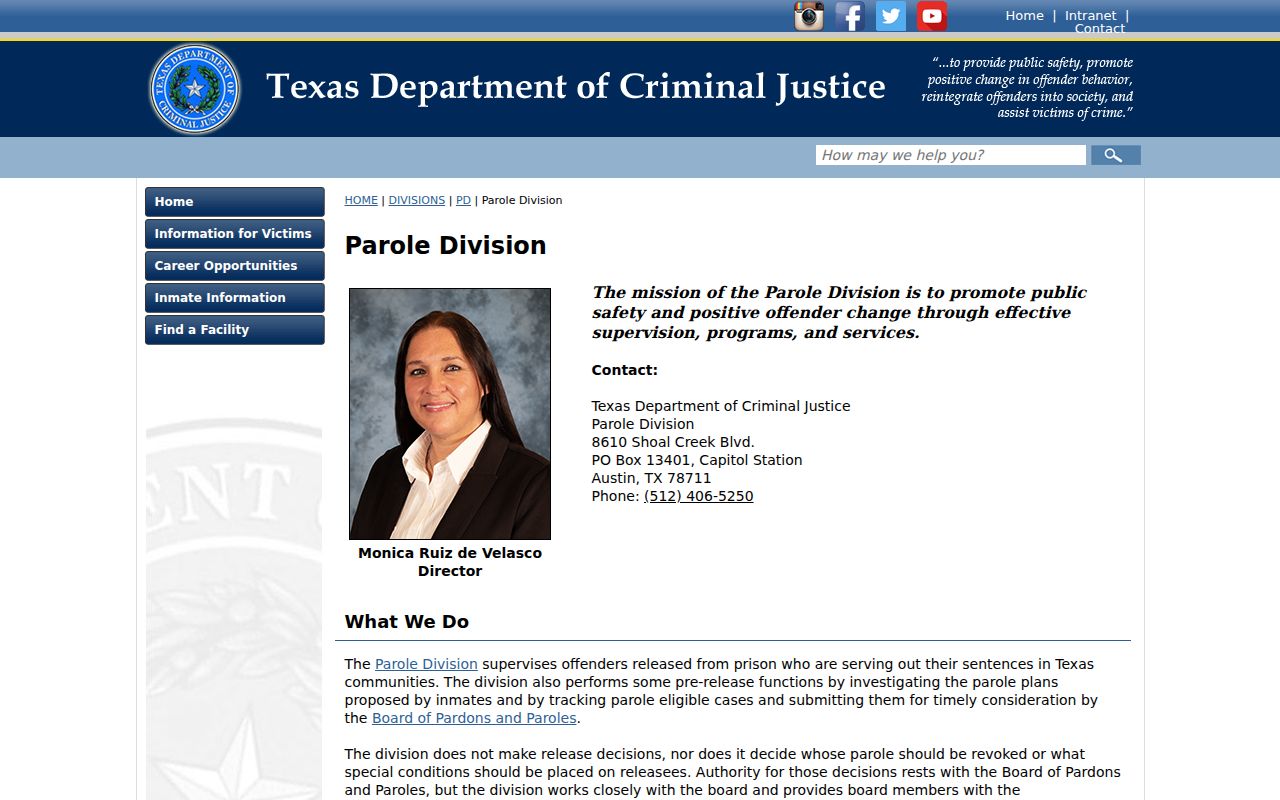
Marion County CSCD handles local community supervision, but its supervision files are confidential and there is no public probation roster. Verify the sentence in the court judgment first.
Federal Criminal Records from Marion County
Marion County lies in the Eastern District of Texas. Federal criminal dockets are searched through PACER, which requires registration and charges under its current fee policy. PACER is the authoritative federal docket route. A state or county search will not replace it.
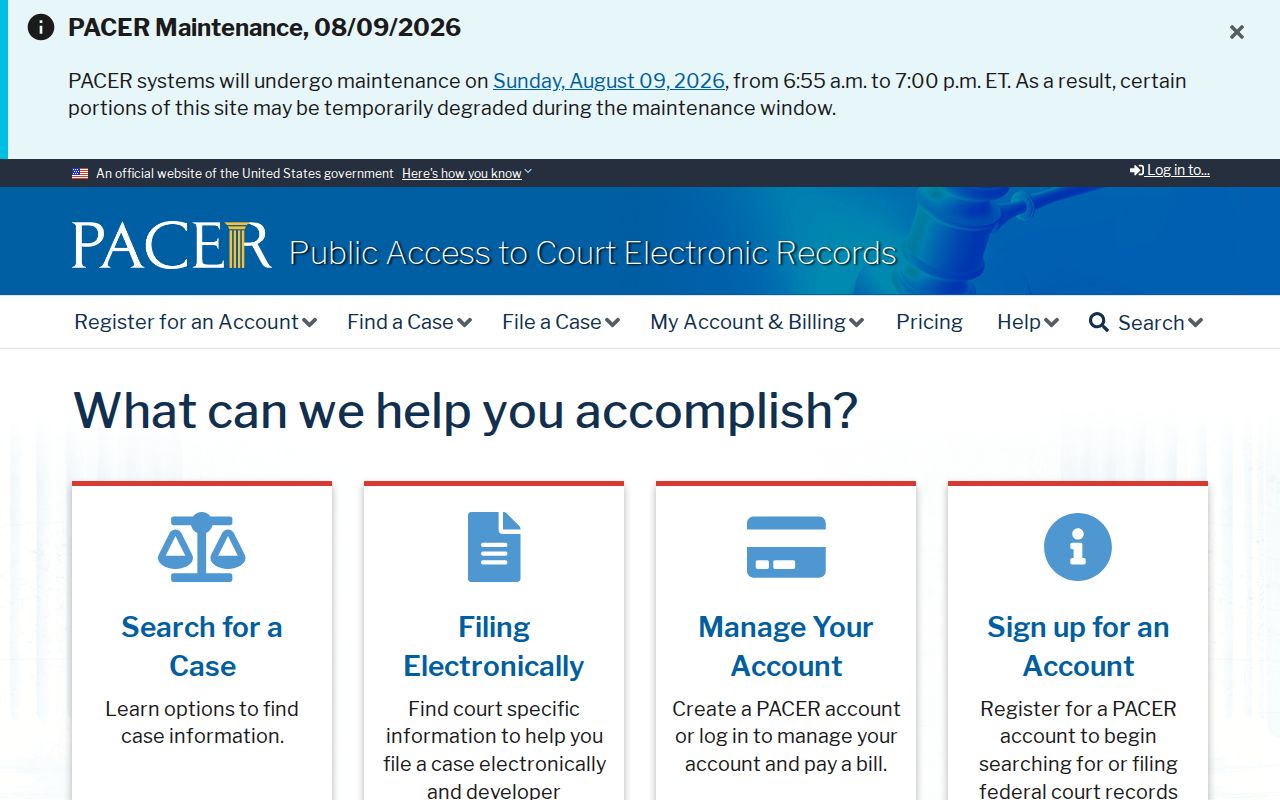
The portal separates federal filings from Marion County clerk records. For federal custody, use the BOP Inmate Locator.
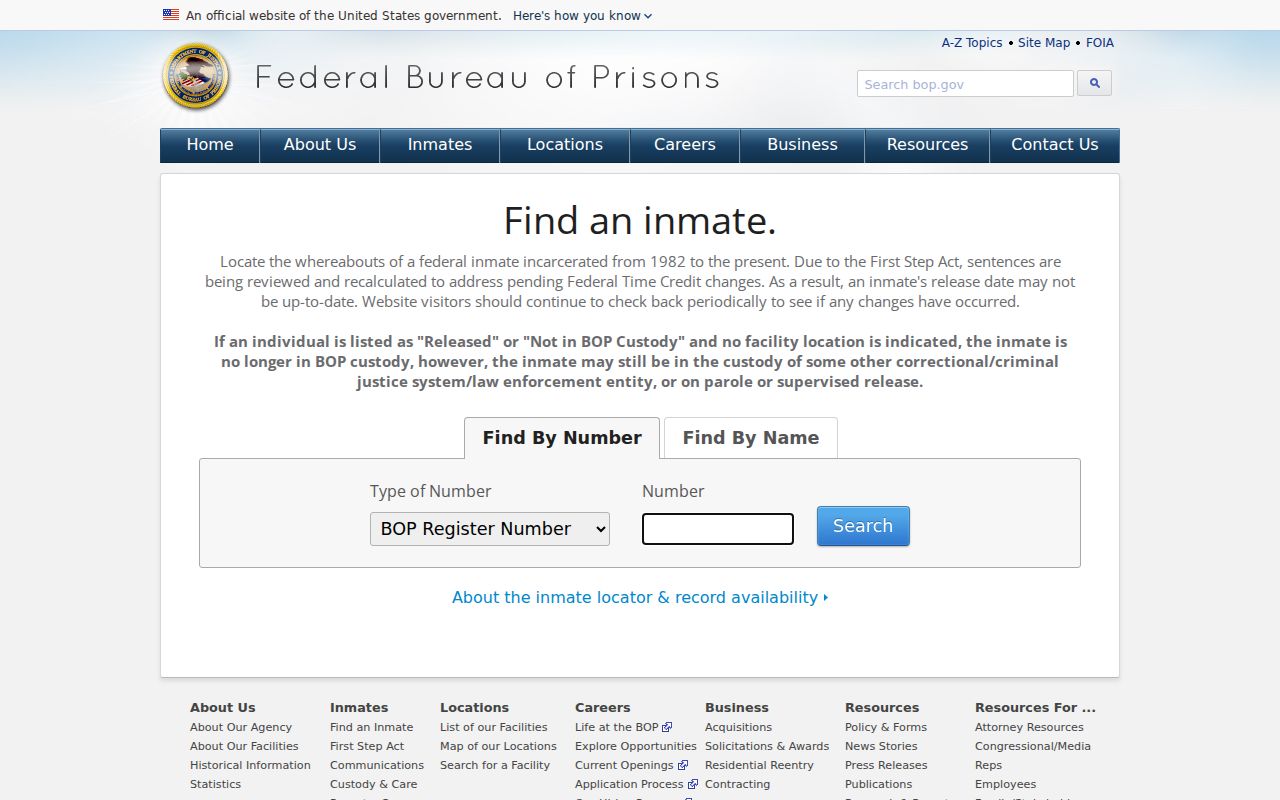
The locator accepts names or federal identifiers and does not cover a person who remains solely in the county jail or Texas state custody.
Criminal Records by City in Marion County
Jefferson is Marion County's only incorporated city. Jefferson Police Department creates city incident and arrest reports, while Jefferson Municipal Court keeps its fine-only and ordinance docket. A custodial booking may move to the county jail, and higher-level charges move into the proper county court. The city route therefore adds records that a District Clerk search alone will not find.
Jefferson's public-information form allows a requester to choose copies, pickup, cost contact followed by mail, or inspection of originals. The city charges $0.10 for a standard page and may add nonstandard-media costs. Its GovRec screen handles payments but is not a full case index. A city reader should call the Municipal Court for the docket, use the City Secretary form for an existing police record, and move to county offices only when booking or jurisdiction requires it.
Jefferson Criminal History
Population 1,875 · Police requests and municipal court records begin with city offices.